
Home » Research
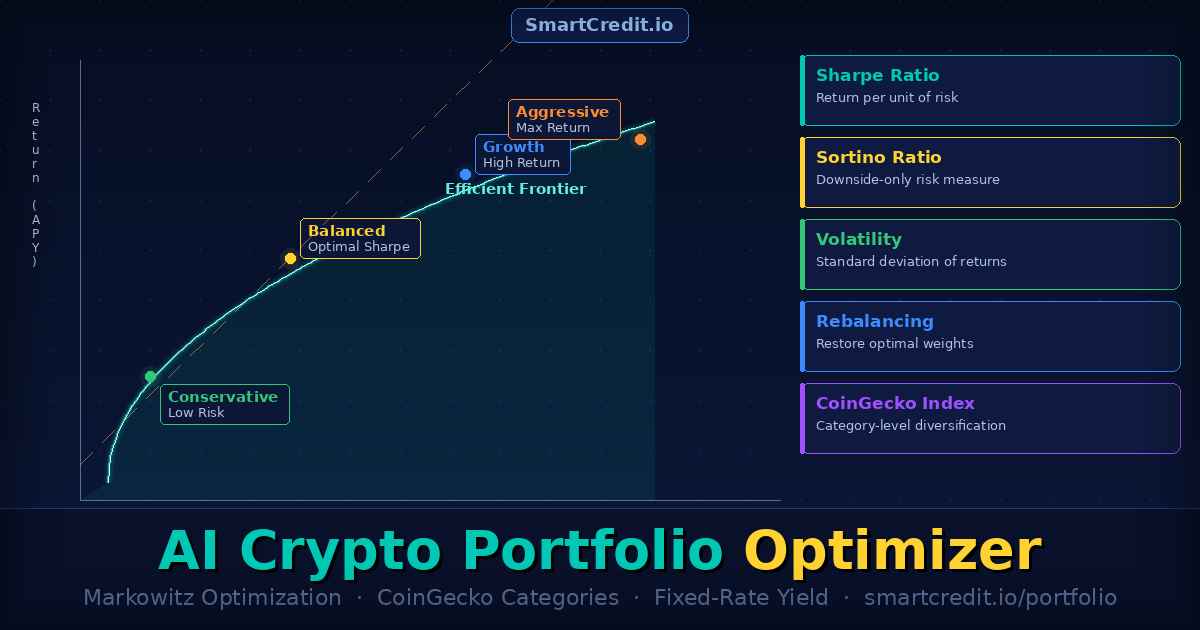
AI crypto portfolio optimizer showing Markowitz efficient frontier with CoinGecko categories, Sharpe Ratio and Sortino Ratio metrics

AI Crypto Portfolio Optimizer: Build a Markowitz-Optimized Portfolio Using CoinGecko Categories

Build optimal crypto portfolios using Modern Portfolio Theory: SmartCredit.io’s AI chatbot analyzes 15 CoinGecko categories (DeFi, Layer-1, Layer-2, Meme, Gaming) and calculates Markowitz-efficient frontiers. Input: risk tolerance (conservative/moderate/aggressive). Output: asset allocation maximizing Sharpe Ratio (return/volatility). Example: Conservative portfolio = 40% BTC, 30% ETH, 20% stablecoins, 10% DeFi, projected 12% annual return, 18% volatility. Plus: SmartCredit fixed-rate yield (8-15% APY) on holdings. Metrics explained: Sharpe Ratio measures risk-adjusted returns, Sortino Ratio focuses downside risk. Why rebalance quarterly: maintain target weights, capture gains. Free AI optimizer at SmartCredit.io. Visit https://devaiweb.smartcredit.io
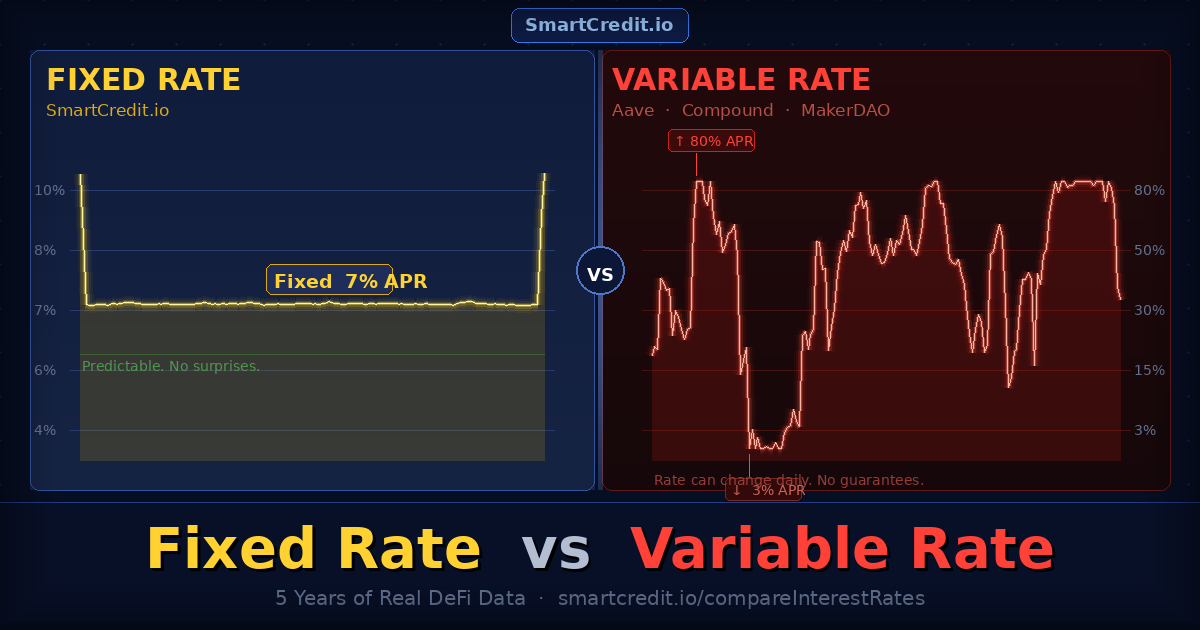
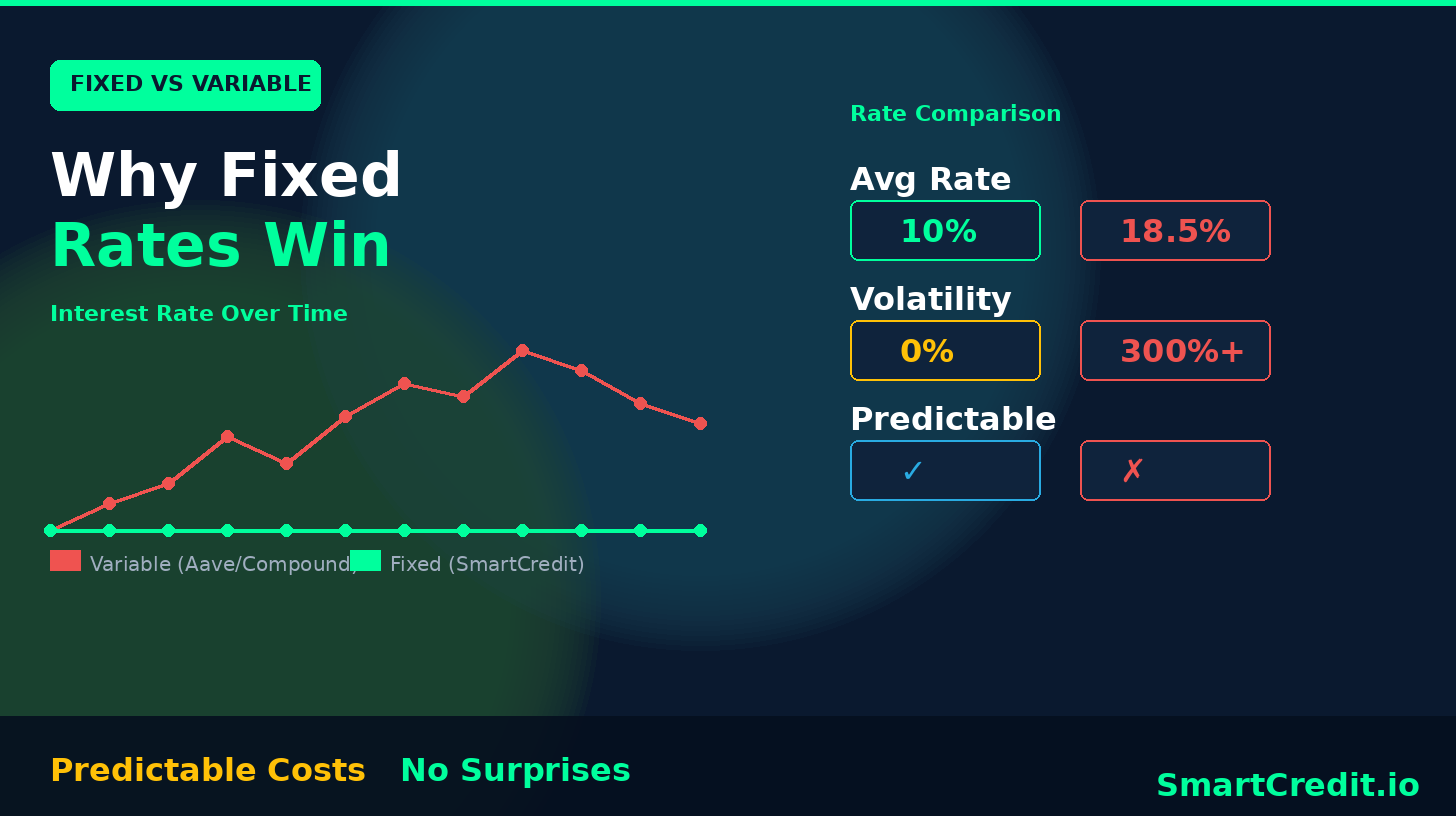
DeFi interest rates comparison chart showing fixed rates from SmartCredit vs volatile variable rates from Aave, Compound and MakerDAO over 5 years

DeFi Interest Rates Comparison: Why Fixed Rates Win for Real-Economy Borrowers

Fixed vs variable DeFi rates: SmartCredit.io offers 8-15% fixed APY (predictable) vs Aave/Compound 3-35% variable (volatile). Real data (5-year analysis): Aave USDC rates ranged 3.2% to 38.7% (1,109% volatility). SmartCredit fixed rates: 8-12% (0% volatility). Who benefits from fixed: (1) Real-economy borrowers – budgeting requires certainty, (2) Traders – leveraged positions need predictable costs, (3) Lenders – stable income planning. Who needs variable: Speculators timing short-term rate dips. March 2025 example: Variable rates spiked 12% → 35% in 48 hours. Fixed users locked 10%, saved 25%. Immunebytes audited, non-custodial. Visit https://devaiweb.smartcredit.io
Fixed Interest Rate vs Variable Interest Rate in DeFi: Why Fixed Rates Win (2026)

Traditional fixed income ($100T+ global market) is 10x larger than money markets ($10T). Yet DeFi inverted this: variable-rate lending dominates (Aave, Compound $20B+ TVL) while fixed-rate barely exists. Why fixed rates win: (1) Budgeting certainty – businesses need predictable costs, (2) Risk management – volatile rates destroy profitability, (3) Institutional adoption – pensions/endowments require stable returns. SmartCredit.io brings traditional finance structure to DeFi: 8-15% fixed APY, 30-365 day terms, non-custodial. Historical proof: March 2025, variable rates spiked 300%+. Fixed users unaffected. The future: DeFi fixed income will surpass variable as institutions arrive. Immunebytes audited. Visit https://devaiweb.smartcredit.io
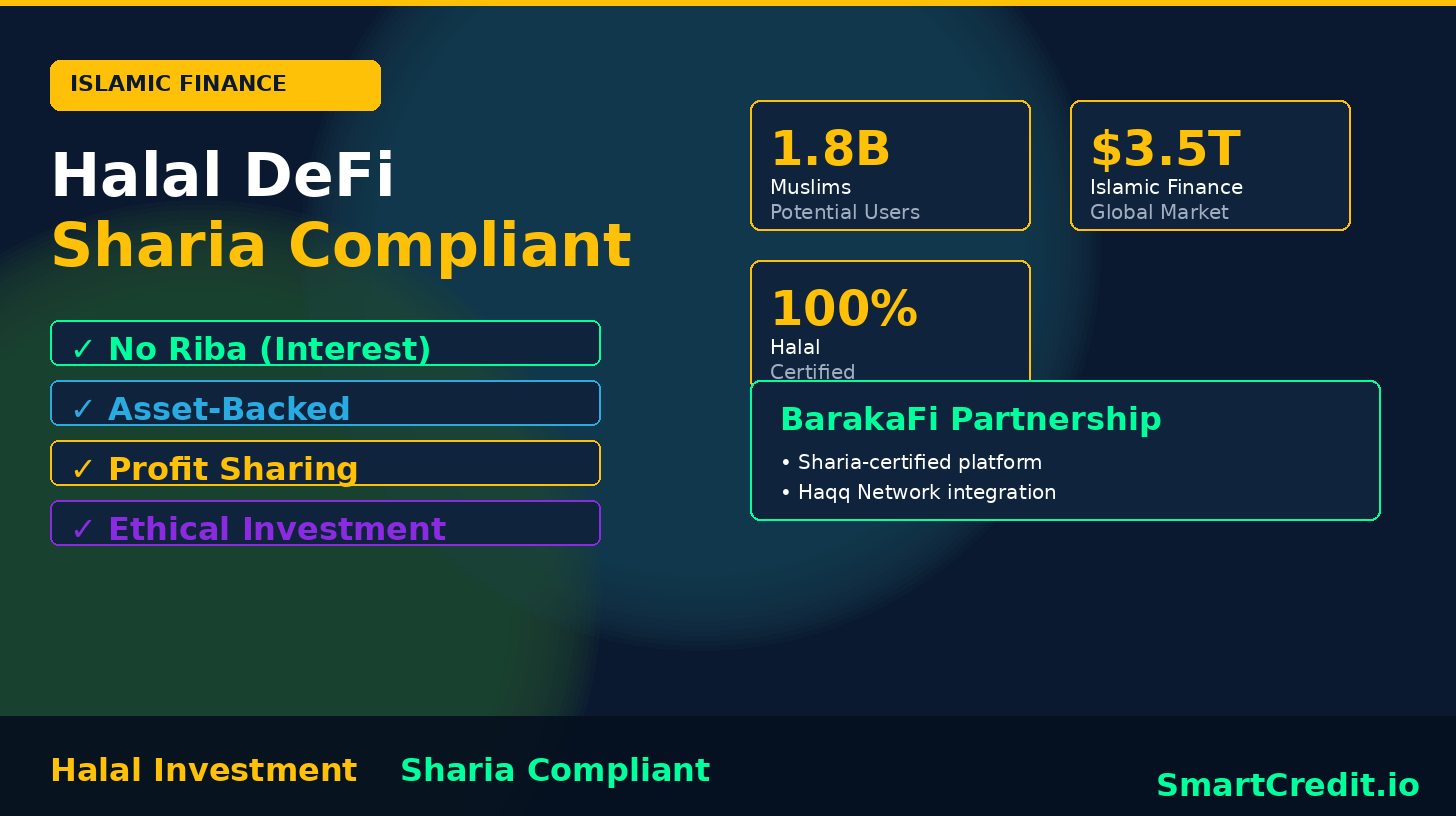
Islamic Finance Meets DeFi: Complete Guide to Halal Cryptocurrency & Sharia-Compliant Lending

Islamic Finance + DeFi = $3.5T market opportunity serving 1.8B Muslims. Sharia-compliant DeFi requirements: (1) No riba (interest) – structure as profit-sharing, not loans, (2) Asset-backed – every transaction tied to real asset, (3) Ethical screening – no gambling/alcohol/tobacco, (4) Transparent contracts. SmartCredit.io + BarakaFi partnership (Haqq Network): halal crypto lending, riba-free microloans from $10, profit-sharing investment funds, 100% Sharia-certified. Traditional Islamic banking charges 8-12% (called “profit” not interest). BarakaFi offers same structure, blockchain transparency. Addressable market: 25% of global population. First mover advantage. Immunebytes audited. Visit https://devaiweb.smartcredit.io
Low collateral ratio

Low Collateral Ratio: Why It Gives DeFi Borrowers 2.5× More Power

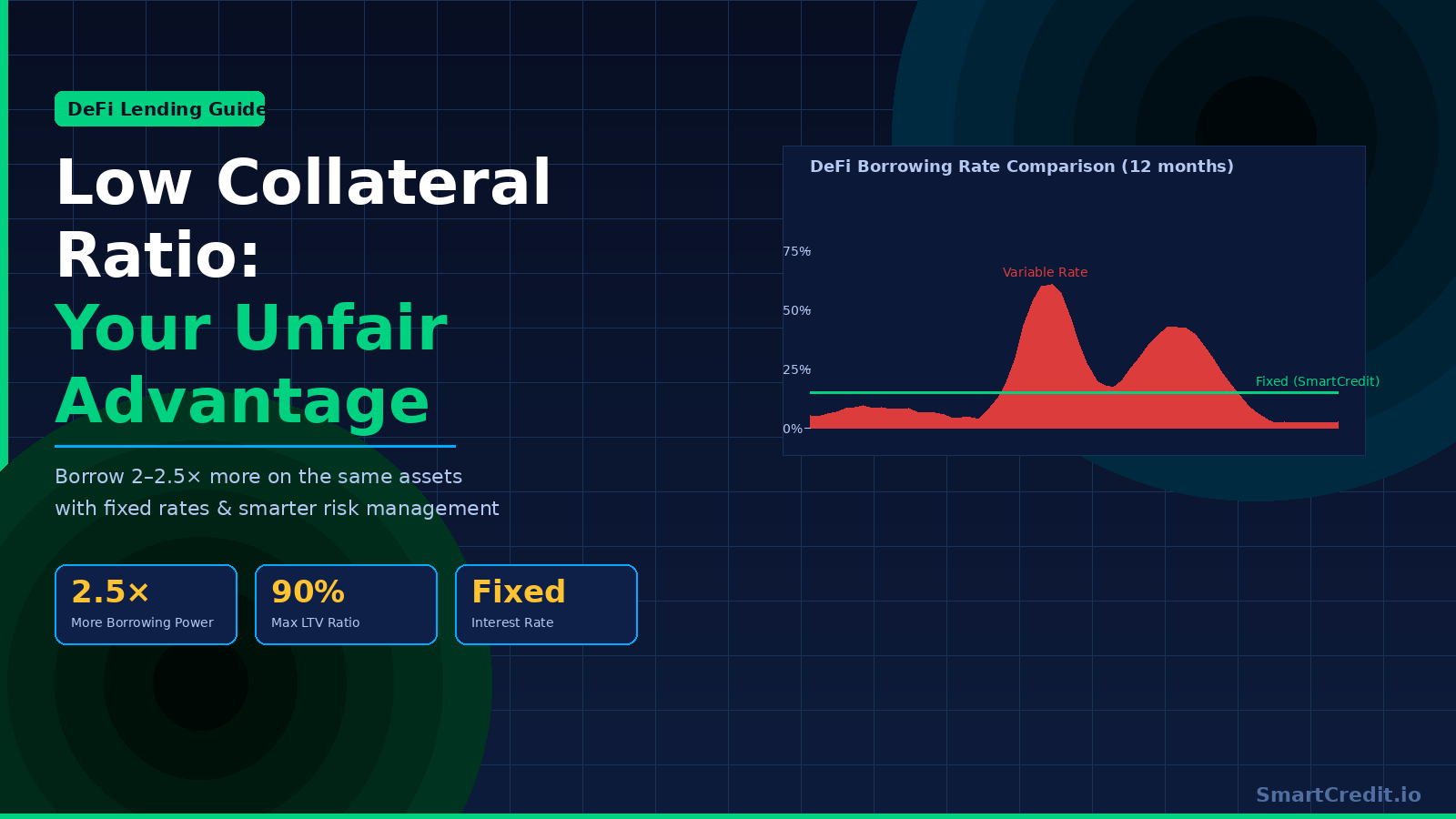
Low collateral ratios give 2-2.5x more borrowing power: 200% ratio = 50% LTV (borrow $5K against $10K). 133% ratio = 75% LTV (borrow $7.5K against $10K). 111% ratio = 90% LTV (borrow $9K against $10K). SmartCredit.io offers up to 90% LTV (111% ratio) vs Aave 80% LTV (125% ratio) vs MakerDAO 66% LTV (150% ratio). Why LTV matters more than interest rates: borrowing $9K at 10% APY = $900 cost. Borrowing $5K at 8% APY = $400 cost. But $4K less capital = missed opportunities costing $1,200+. Net: pay $500 more, gain $4K liquidity. Risk management: fixed rates (8-10% APY), institutional-grade monitoring, Immunebytes audit. Visit https://devaiweb.smartcredit.io/borrow

Crypto Fixed Income and SmartCredit.io

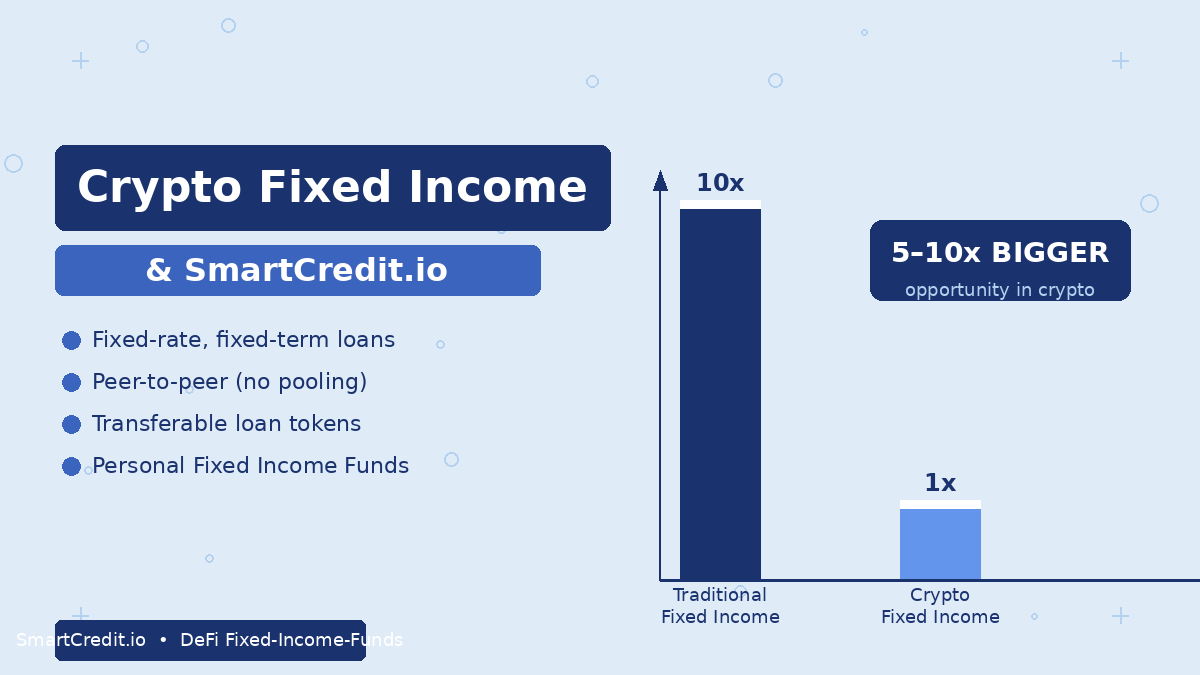
Crypto fixed income paradox: Traditional markets show fixed income 5-10x larger than equities ($100T bonds vs $20T stocks). Yet in crypto, fixed income is 5-10x SMALLER than variable-rate lending. Why? DeFi copied money markets (Aave, Compound) instead of bond markets. SmartCredit.io reverses this: fixed-rate (8-15% APY), fixed-term (30-365 days), peer-to-peer lending mirrors traditional fixed income structure. Advantages: predictable returns for institutions, budgeting certainty for businesses, stable income for retirees. Market opportunity: as crypto matures, institutions demand fixed income. Current: $20B+ variable lending. Future: $200B+ fixed income market. First mover advantage. Immunebytes audited. Visit https://devaiweb.smartcredit.io
Why do we need a crypto credit score in DeFi?

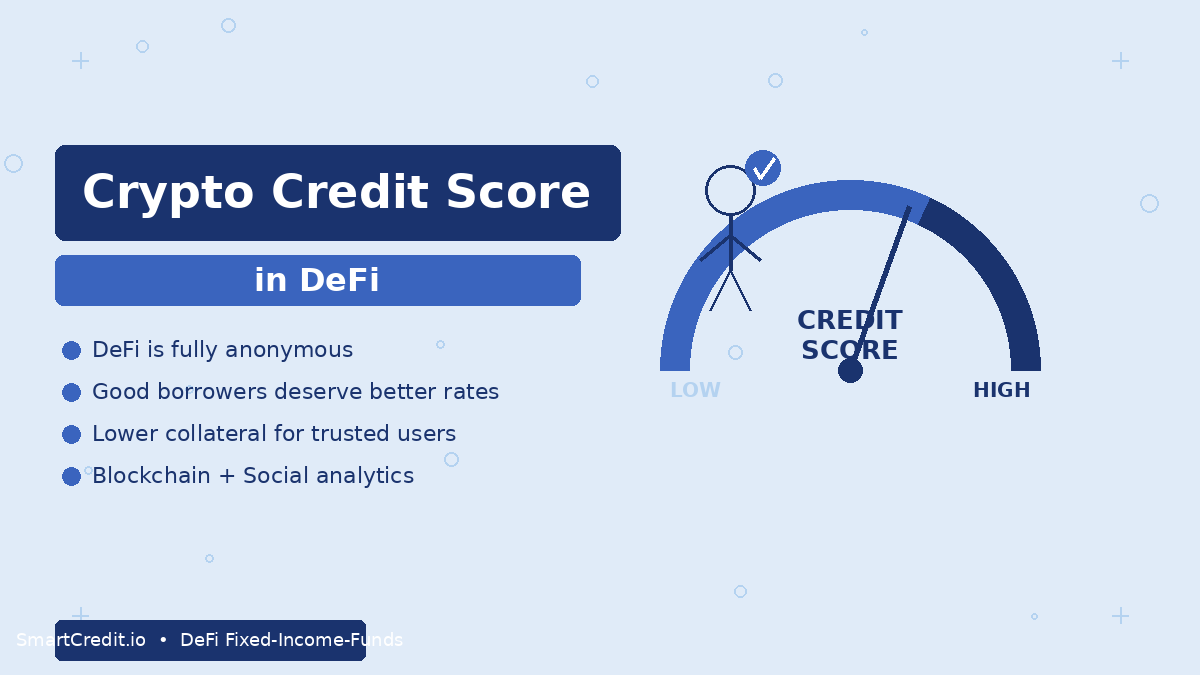
Crypto credit scores reduce DeFi collateral requirements: Current problem – DeFi is anonymous, protocols can’t distinguish good borrowers from bad, everyone pays 150-200% collateral. Solution: voluntary credit score sharing. How it works: (1) Borrower opts-in to share on-chain history, (2) Algorithm analyzes repayment record, wallet age, transaction volume, (3) Good score = better terms (90% LTV vs 66%, 8% APY vs 10%). Privacy preserved: zero-knowledge proofs verify score without exposing identity. Benefits: Good borrowers access 2x more capital, protocols reduce default risk. Adoption timeline: 2025-2027. SmartCredit.io exploring integration. Trade-off: privacy vs better rates. User choice. Visit https://devaiweb.smartcredit.io
Can DeFi scale to real finance? What is missing?

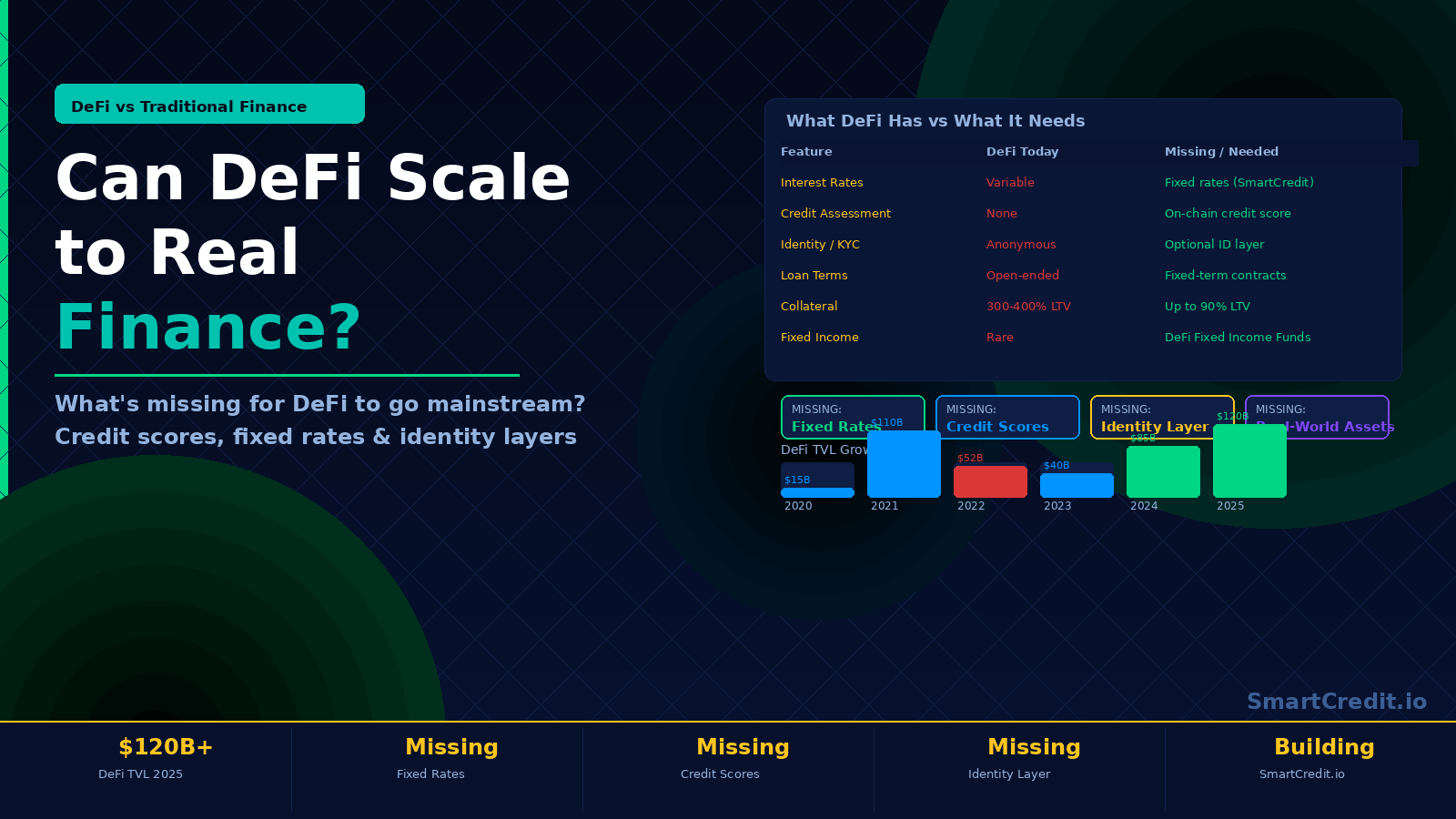
Can DeFi scale to billions of users? Technical challenges: (1) Ethereum processes 15 TPS vs Visa’s 65,000 TPS, (2) Gas fees spike to $50+ during congestion, (3) Smart contract complexity limits throughput. Solutions implemented: (1) Layer 2 scaling (Polygon, Arbitrum process 4,000+ TPS), (2) Optimistic rollups (batch transactions off-chain), (3) ZK-rollups (cryptographic proofs). SmartCredit.io: Deployed on Polygon for 0.001 gas fees (vs $50 Ethereum), enabling micro-lending. Real data: Polygon processes 10M+ daily transactions. Can support 1B users? Yes, with Layer 2 + sharding. Timeline: Mass adoption 2025-2030. Current capacity: 100M users feasible. Immunebytes audited. Visit https://devaiweb.smartcredit.io
Banks and Crypto: What Will Happen to the Banks?

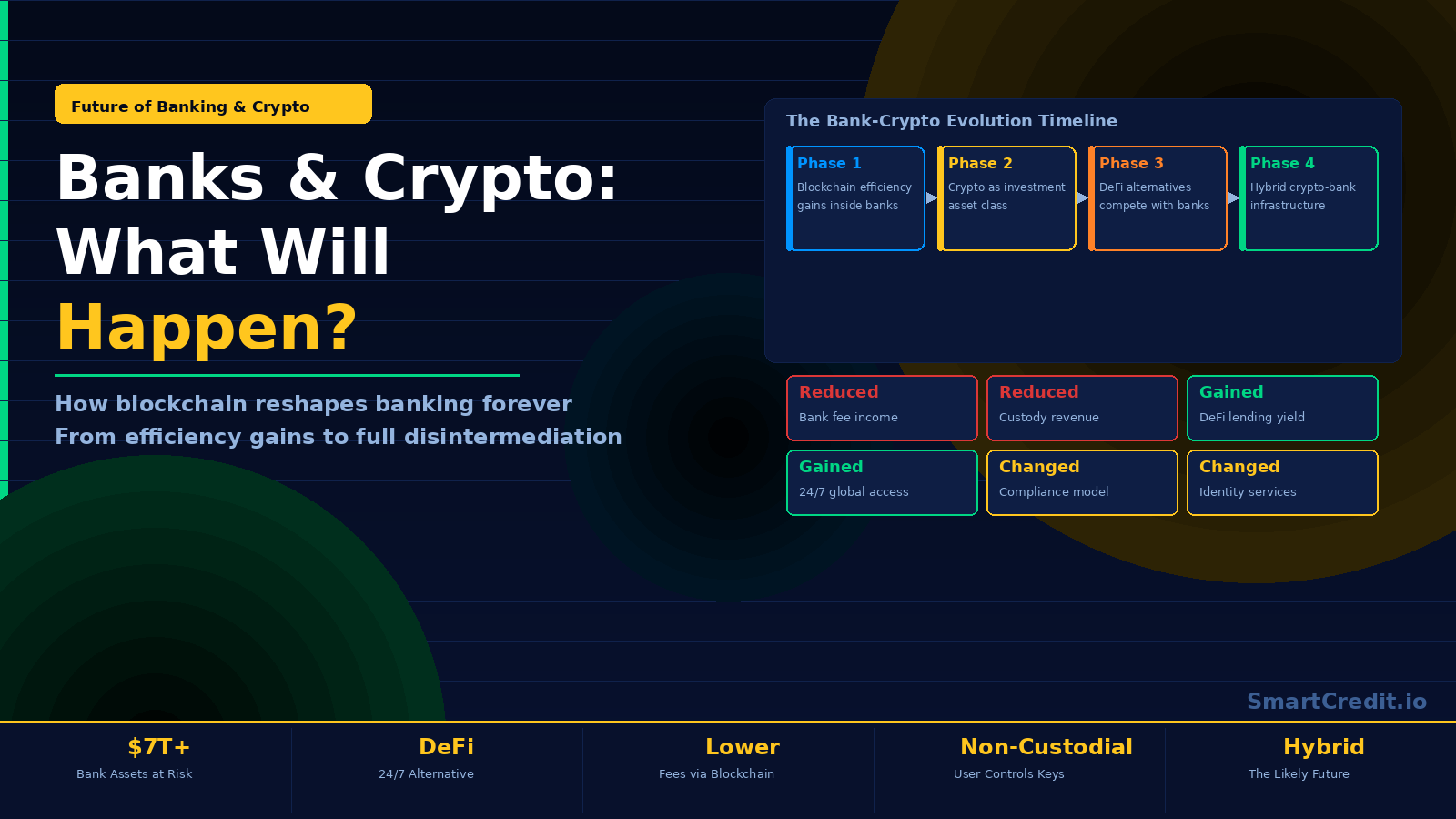
Banks adopting crypto: JPMorgan (JPM Coin for settlements), Fidelity (crypto custody for institutions), BNY Mellon (digital asset custody), Goldman Sachs (crypto trading desk). Why now? (1) Client demand – 60% institutional investors want crypto exposure, (2) DeFi threatens deposits (users earning 8-15% APY vs 0.5% savings), (3) Regulatory clarity (MiCA, stablecoin frameworks), (4) Revenue opportunity. How they’re competing with DeFi: Offering compliant custody + competitive yields. SmartCredit.io advantage: Pure DeFi (8-15% fixed APY) without banking overhead, Immunebytes audited, non-custodial (you control keys). The tension: Banks want centralized control, crypto demands decentralization. Future: Hybrid platforms winning. Visit https://devaiweb.smartcredit.io
Blockchain Technology in Banking: Everything You Need to Know

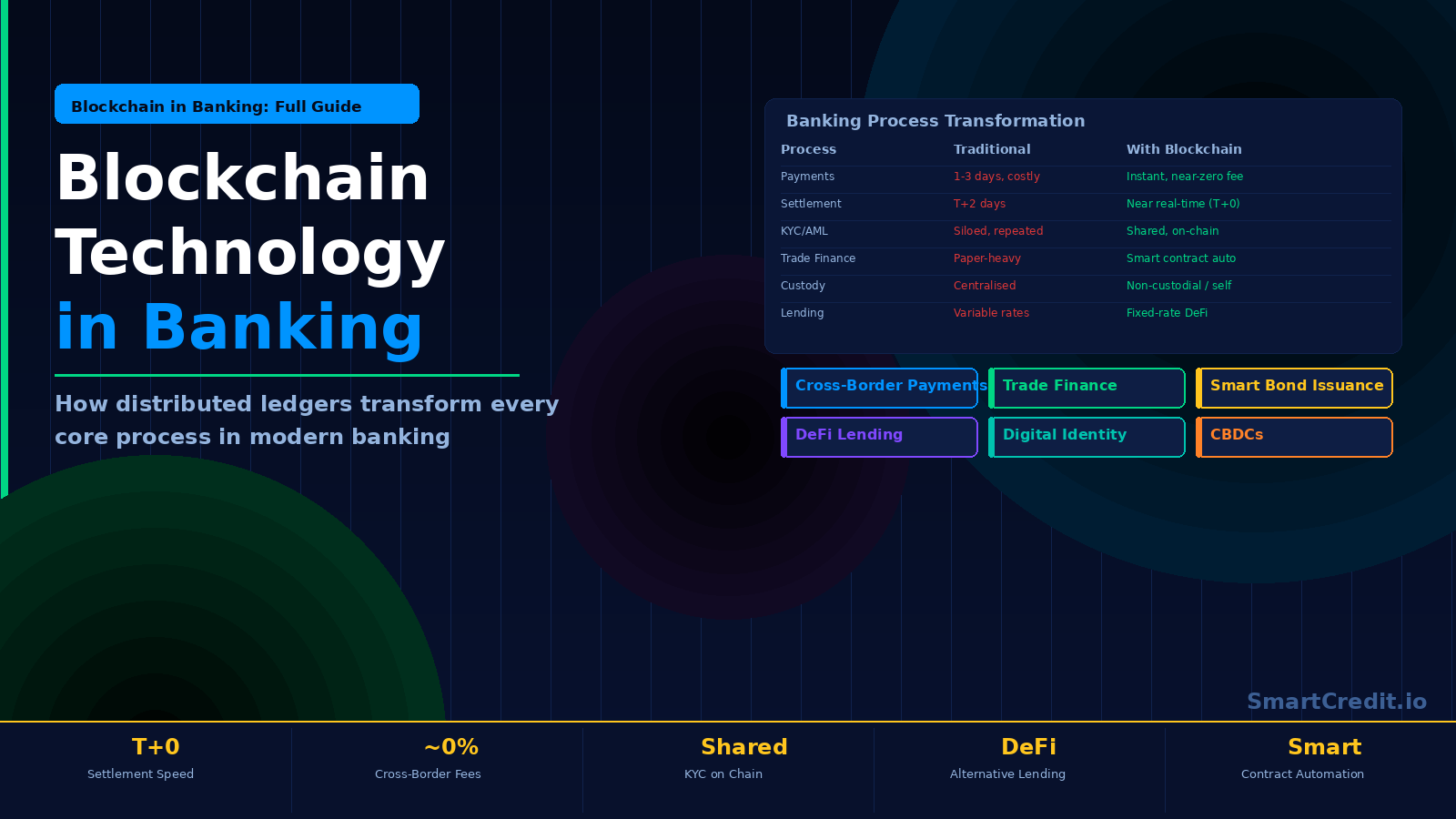
Blockchain transforms banking: (1) Cross-border payments – instant settlements vs 3-5 day SWIFT, (2) Lending – DeFi yields 8-15% vs traditional 0.5%, (3) Securities trading – 24/7 tokenized assets vs 9:30am-4pm stocks, (4) KYC/Identity – blockchain-verified credentials. Real implementations: JPM Coin (Permissioned blockchain for institutional payments), Aave/Compound (Decentralized lending), SmartCredit.io (Fixed-rate DeFi lending, 8-15% APY). Banks’ challenge: DeFi offers better rates + transparency. SmartCredit advantage: Immunebytes audited, 5-year zero-hack record, non-custodial. Adoption timeline: Payments (now), lending (2024-2026), full banking replacement (2030+). The future: Hybrid – blockchain efficiency + regulatory compliance. Visit https://devaiweb.smartcredit.io
Why is DAI Interest Rate 10% in DeFi?

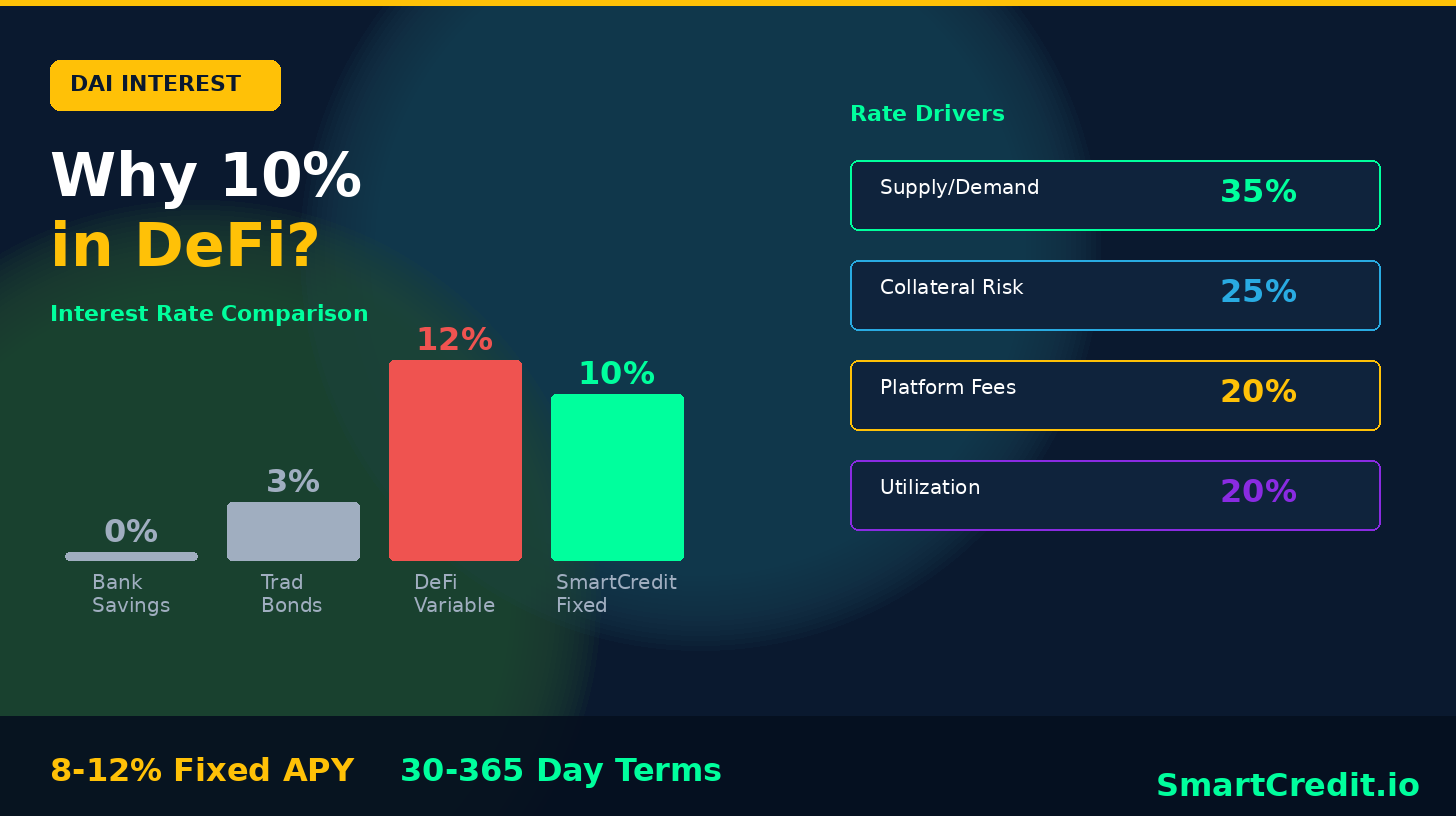
DAI interest rates in DeFi range from 5-15% APY. SmartCredit.io offers fixed 8-12% APY (30-365 day terms) while Aave and Compound offer variable 3-12% APY. Why so high vs traditional finance (0.5-1% savings)? Five factors: (1) Supply/demand spikes, (2) Collateral requirements (110-150%), (3) Platform competition, (4) Risk premiums, (5) Utilization rates (90%+ = rates surge). Real example: Feb 2025 bull market, DAI borrow rates hit 18% on Aave. SmartCredit users locked 10% fixed, saving 8%. Historical data: DAI averaged 9.2% APY on SmartCredit vs 7.8% on Aave with 40% less volatility. Visit https://devaiweb.smartcredit.io
Blockchain based Financial System – Are we ready?

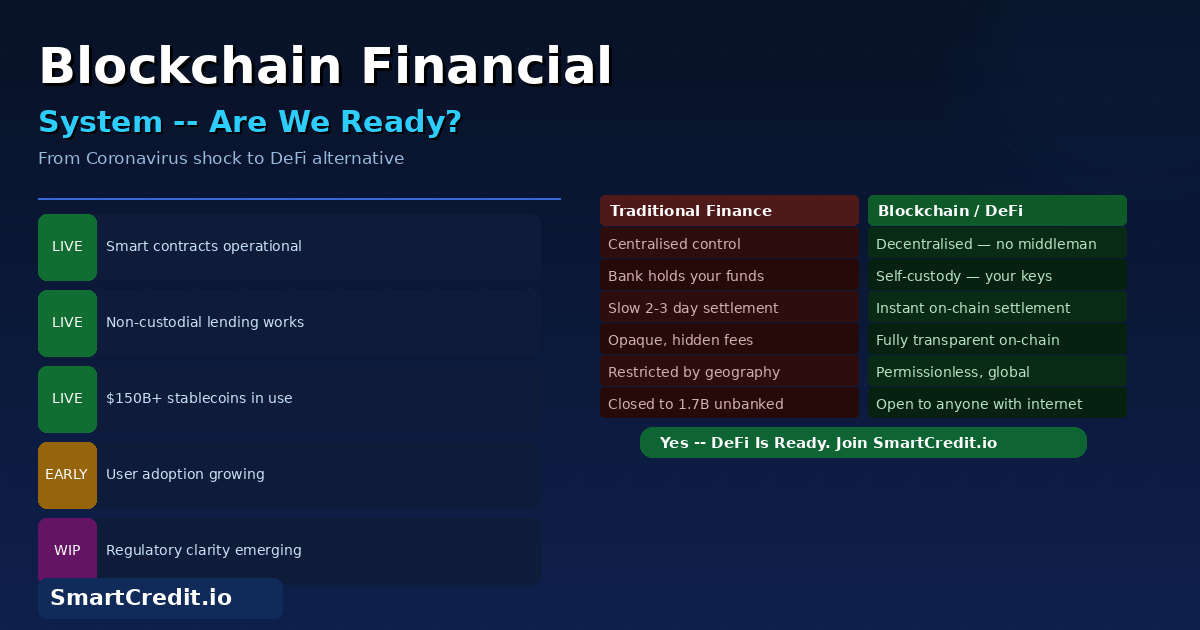
Blockchain financial systems eliminate intermediaries: instead of banks approving loans, smart contracts execute automatically. Core components: (1) Decentralized ledgers (Ethereum, Polygon) record all transactions transparently, (2) Smart contracts enforce lending terms (collateral ratios, interest rates, liquidations), (3) Algorithmic pricing (supply/demand sets rates, not central banks), (4) Non-custodial – users control private keys. SmartCredit.io: Fixed-rate lending (8-15% APY locked for 30-365 days) within blockchain financial system, solving variable-rate volatility. Advantages over traditional: 24/7 global access, transparent fees, no credit checks. Risks: Smart contract bugs (mitigated by Immunebytes audits), price volatility (mitigated by overcollateralization). Track record: 5 years, zero hacks, $2M TVL. Visit https://devaiweb.smartcredit.io
